
Stars on Flags: What They Really Mean
More than a quarter of all national flags include at least one star. It is by far the most popular symbol in vexillology, and also the most versatile: the same five-pointed shape can count provinces, map a real constellation, proclaim a religion or condense an entire ideology. The meaning is never in the star itself, but in who put it there and why. These are the great families of star flags, with the stories behind them.
Counting Things: The United States
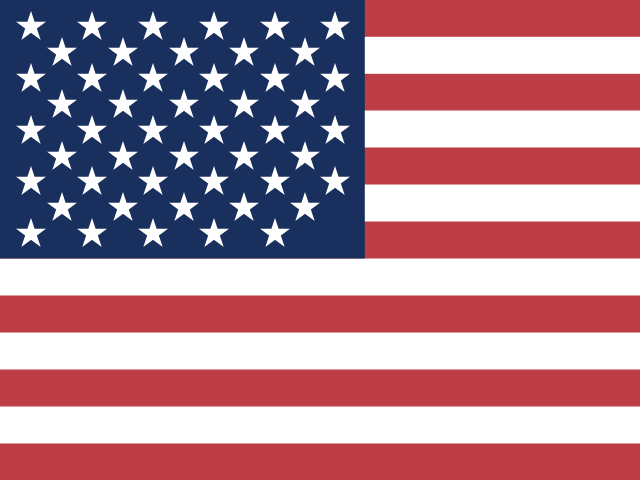
The most famous star count in the world: the US flag carries one star per state, which is why the design has been officially updated 27 times since 1777, more than any other national flag. The 13 stripes, meanwhile, have stayed fixed, honoring the original colonies.
The current 50-star version has a story worth telling. In 1958, with Alaska and Hawaii about to join, a 17-year-old high school student named Robert Heft designed a 50-star layout for a class project. His teacher gave it a B minus, joking that it would only deserve more if Washington adopted it. Heft mailed it to the White House, President Eisenhower selected it, and the grade was raised to an A. It became official on July 4, 1960, and has now flown longer than any previous version. The same counting logic drives the state flags themselves: the Lone Star of Texas predates its US statehood and still symbolizes its independent streak.
Mapping the Sky: Brazil, Australia and New Zealand
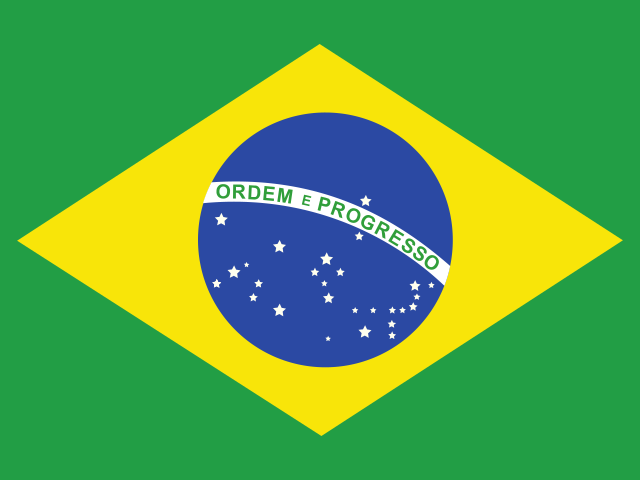
Some flags are literal star maps. The celestial globe on the Brazilian flag reproduces the sky over Rio de Janeiro on the morning of November 15, 1889, the day the republic was proclaimed. Each of its 27 stars is a real star assigned to a real state: Spica for Pará, Sirius for Mato Grosso, and so on. It is the only flag in the world where every star is astronomically identified, and they are drawn as seen from outside the celestial sphere, mirrored, a detail that has fueled arguments among astronomers for a century.
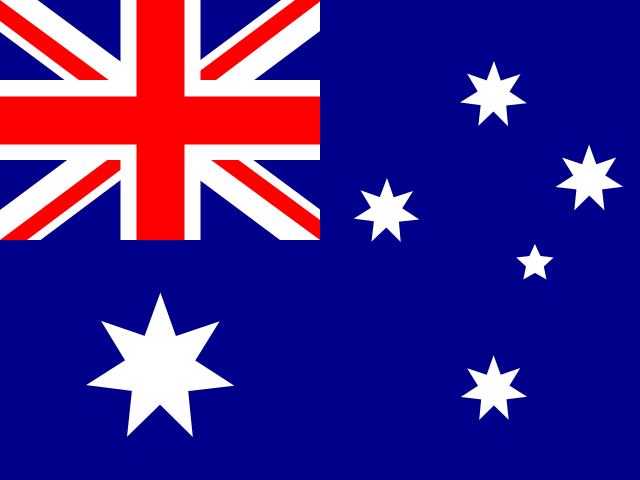
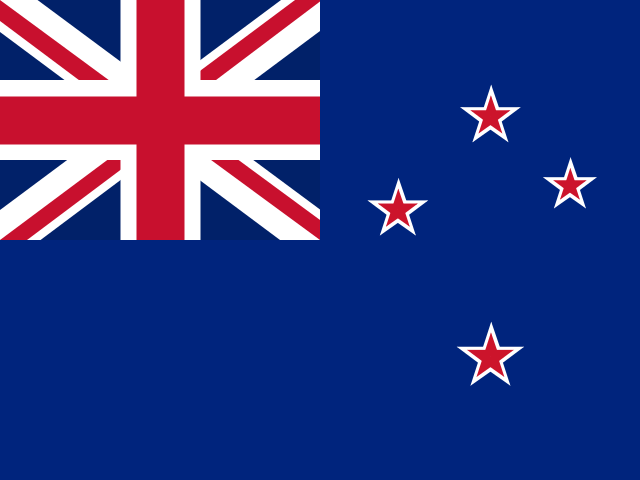
Australia and New Zealand both display the Southern Cross, the constellation that guided navigators in the southern hemisphere for centuries. The differences are a classic quiz trap: Australia's stars are white with seven points (plus the large Commonwealth Star, whose seven points stand for the six states and the territories), while New Zealand's are red with white borders and only four stars. The two flags are confused so often that New Zealand held referendums in 2015 and 2016 to replace theirs; voters kept the original.
Faith: Turkey, Morocco and the Crescent Family
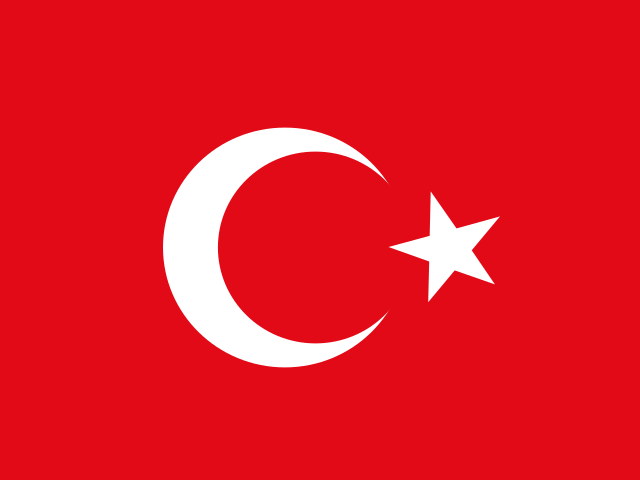
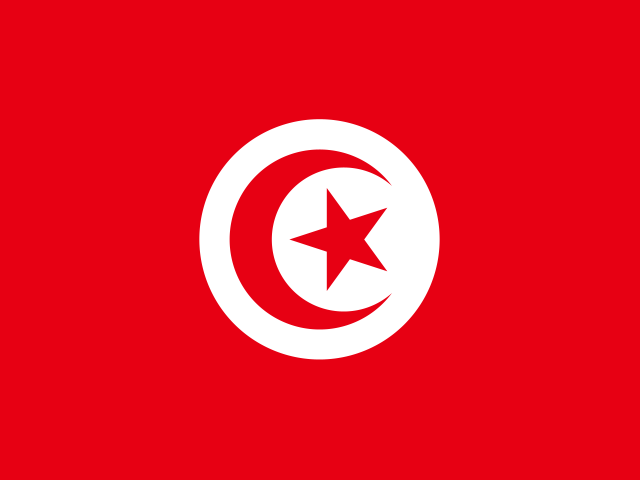
The star and crescent of Turkey is far older than most people think: the motif appears on coins from Byzantium centuries before Islam. It was the Ottoman Empire that turned it into the emblem of the Muslim world, and a legend says the design was inspired by the reflection of the moon and a star in a pool of blood after a great battle. From the Ottoman template it spread to Tunisia, Algeria, Pakistan and Malaysia, each adapting colors and proportions.
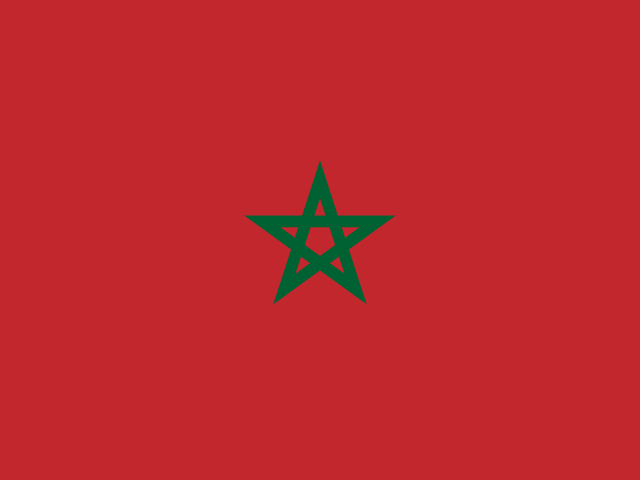
Morocco took a different path: no crescent, just a green five-pointed interlaced star known as the Seal of Solomon on a red field. The five points are commonly linked to the five pillars of Islam. The green star was added in 1915 precisely to distinguish the plain red flag from other red banners of the region.
Ideology: China, Vietnam and Cuba
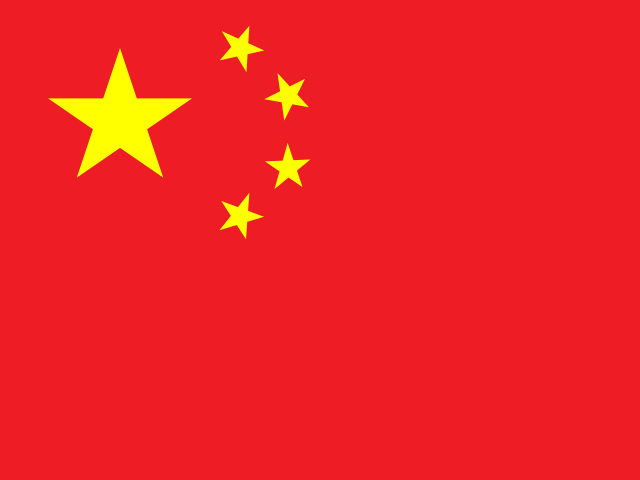
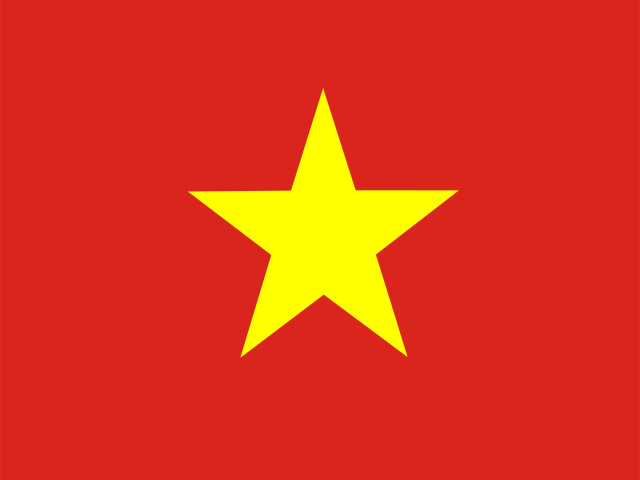
On the Chinese flag, the large star represents the Communist Party and the four small ones the social classes of Mao's 1949 doctrine: workers, peasants, urban petty bourgeoisie and national bourgeoisie. The design came from a public competition with nearly 3,000 entries, and the winner, Zeng Liansong, was an accountant. Vietnam's single gold star has five points for workers, peasants, soldiers, intellectuals and youth.
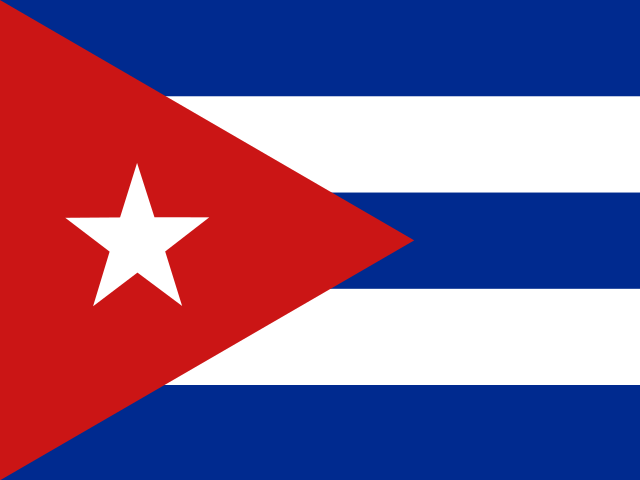
The lone white star of Cuba, La Estrella Solitaria, predates communism entirely: it was designed in 1849 as a beacon of independence, borrowed visually from the US lone-star tradition. It is a good reminder that the same shape can carry opposite ideologies a century apart.
Stars That Count Islands: Cape Verde, Comoros and Micronesia
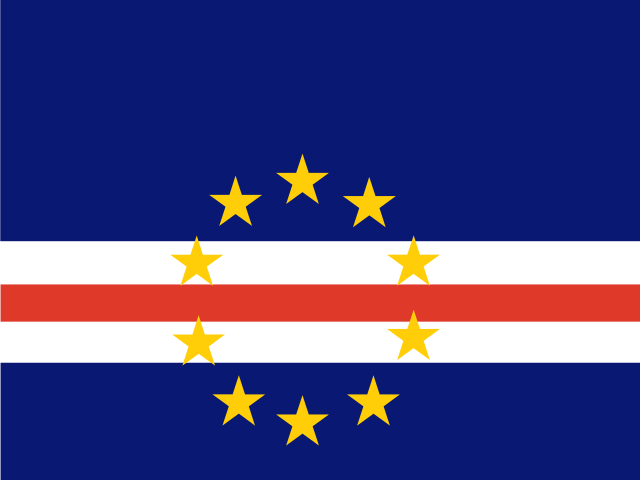
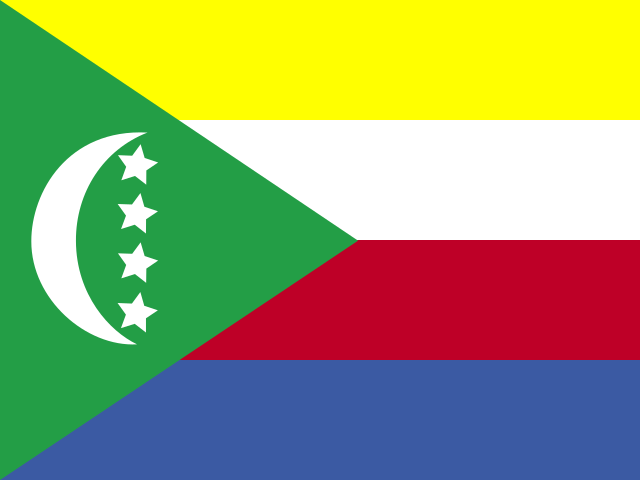
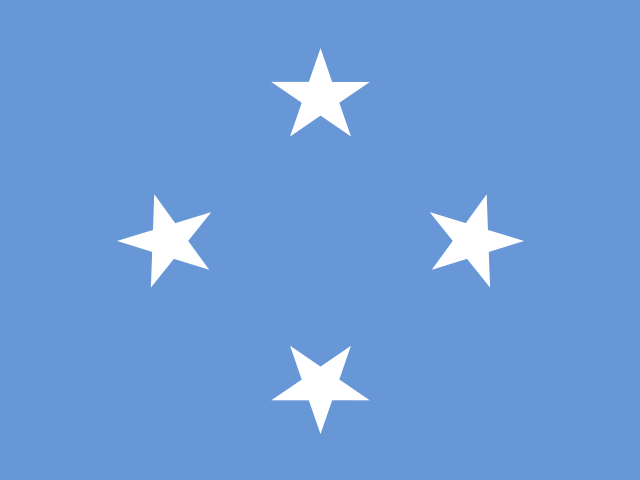
Island nations love star arithmetic. Cape Verde arranges ten yellow stars in a circle, one per island, on a blue field crossed by red and white stripes; the 1992 design deliberately echoes the ring of stars of the European flag. The four stars of Comoros count its four main islands, including one the country claims but does not administer (Mayotte, a French territory), making it one of the few flags with a territorial claim built in. Micronesia floats four white stars on UN blue, one per state, a quiet echo of its history under UN trusteeship.
The Philippines: The Flag That Flips in Wartime
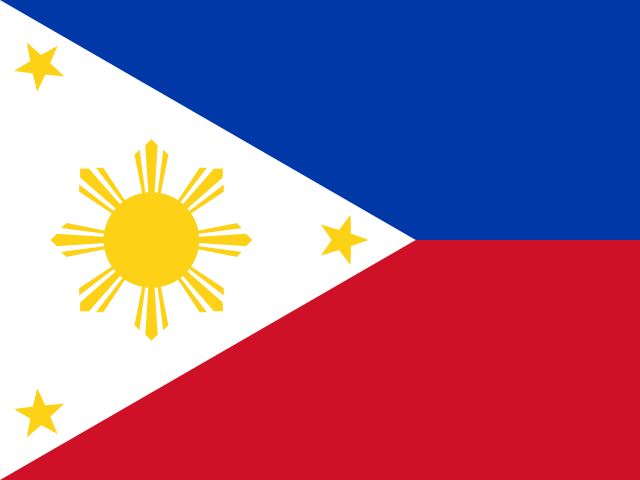
The Philippine flag carries three gold stars for its three great island groups (Luzon, the Visayas and Mindanao) and a sun with eight rays for the eight provinces that first rose against Spain in 1896. Its most unusual feature is functional: the Philippines is the only country whose flag legally changes meaning when displayed upside down. Blue on top means peace; red on top is a formal declaration that the country is at war. It has flown red-side-up during World War II and, by accident, at more than one political rally since.
One Star, Maximum Weight: Chile, Venezuela and Somalia
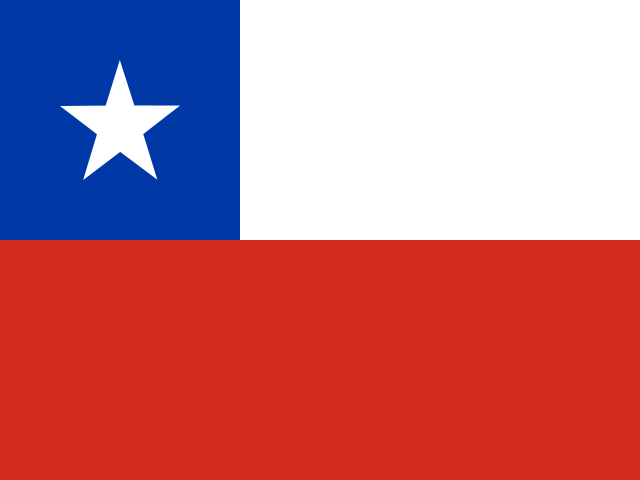
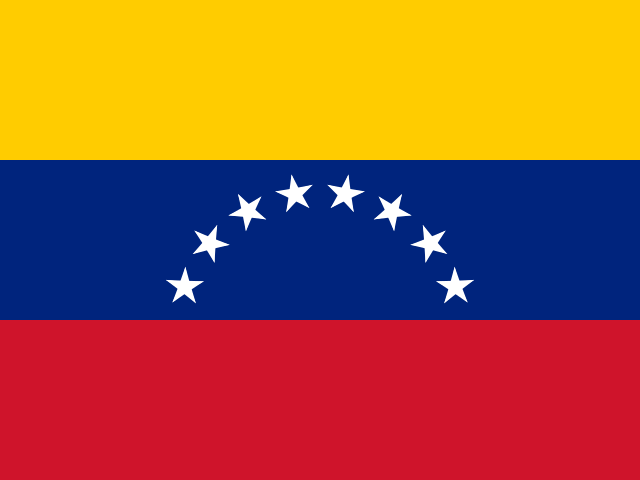
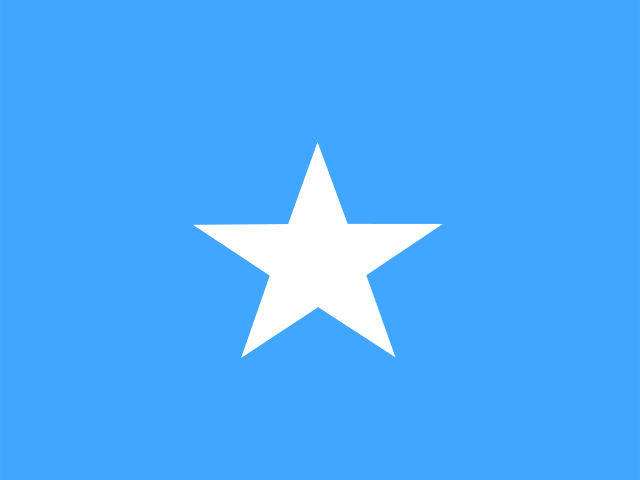
Chile's white star, on a flag adopted in 1817, guides the path of progress and honor. Venezuela shows how political stars can be: its arc grew from seven to eight stars in 2006, when the government revived Simón Bolívar's 1817 decree adding a star for the province of Guayana, and the change remains a point of debate. Somalia's single white star is the most ambitious of all: each of its five points represents one of the five regions historically inhabited by Somali people, including territories in neighboring countries, which makes it one of the few flags with an openly irredentist star.
Stars Without End: Bosnia's Open Row
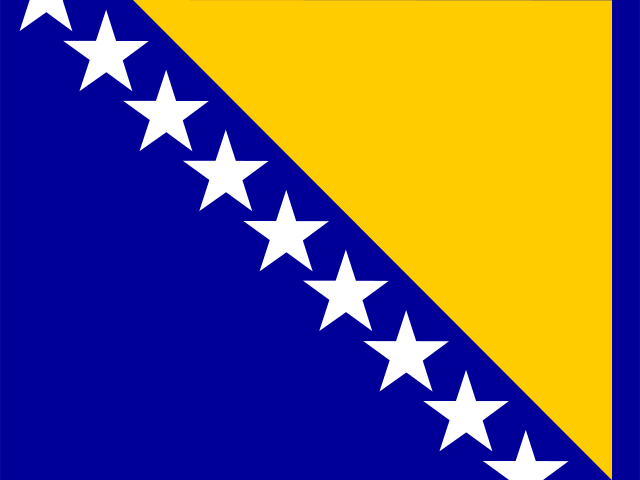
The flag of Bosnia and Herzegovina (1998) uses stars in the most abstract way on this list: a diagonal row of white stars, with the top and bottom stars deliberately cut in half by the flag's edges, implying the row continues infinitely. Designed under international mediation after the war, it avoids every ethnic symbol; the blue and yellow echo the flag of Europe, and the infinite stars stand for a continuity bigger than any one group.
The Newest Stars in the Catalog
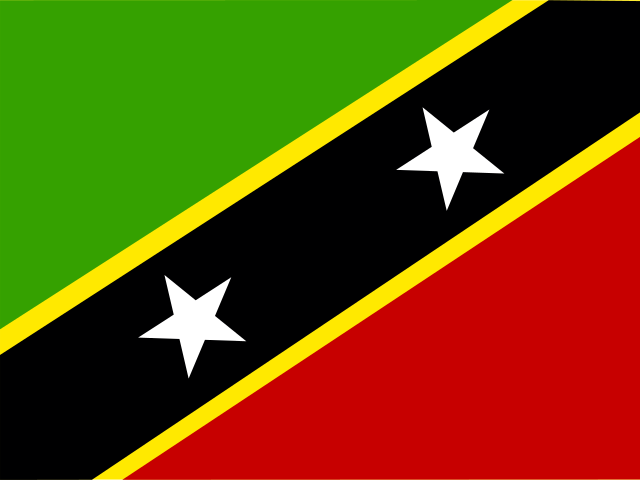
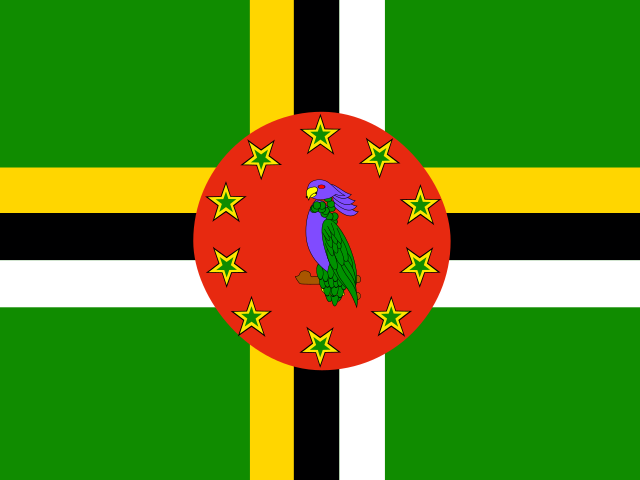
Two Caribbean flags give stars yet another meaning. The two stars of Saint Kitts and Nevis stand for hope and liberty, not for the two islands as everyone assumes. And Dominica arranges ten green stars in a circle, one per parish, around its famous mountain parrot, on one of only two national flags that use the color purple.
How many star flags can you identify? Test yourself with our world flags quiz, or dive deeper into what flag colors mean.
Comments
No published comments yet.
Leave a comment
Share a question or something useful about the article. Comments are reviewed before publication. Please leave out personal details and advertising.