
City Flags: The Best (and Worst) Designs
National flags get all the attention, but some of the best (and worst) flag design in the world happens at city level. A great city flag ends up on t-shirts, tattoos, murals and craft beer labels. A bad one gets forgotten, or mocked into a redesign. There is even data on this: in 2004, the North American Vexillological Association (NAVA) surveyed hundreds of people on the designs of 150 US city flags, and the results (Washington, D.C. first, Chicago second, Pocatello dead last) kicked off a wave of municipal flag reform that is still going. These are the most instructive cases, good and bad.
Chicago: The Gold Standard
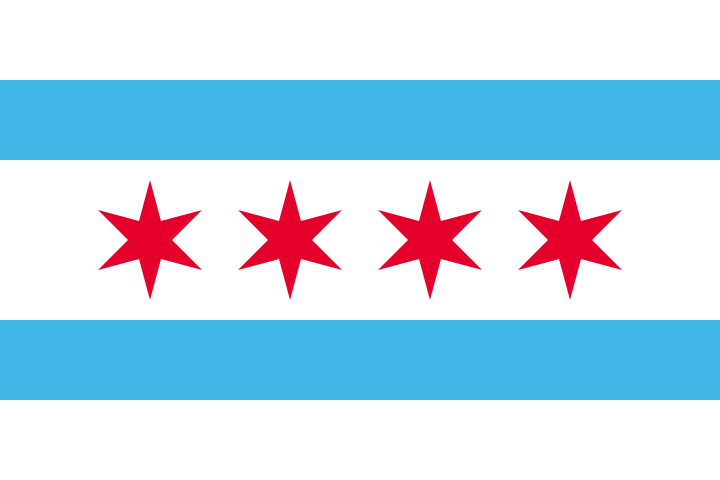
Ask any vexillologist for the most beloved city flag in the world and the flag of Chicago will come up first. Designed by poet Wallace Rice in 1917, it puts two blue stripes (the north and south branches of the Chicago River) on white, with four red six-pointed stars: Fort Dearborn, the Great Fire of 1871, the World's Columbian Exposition of 1893 and the Century of Progress fair of 1933. The last two stars were added in 1933 and 1939; proposals for a fifth star surface every few years.
Two details show the craft. The stars have six points, drawn sharp, specifically so they would not be confused with the five-pointed stars of the US flag. And the design is simple enough for a child to draw from memory, which is exactly why it is everywhere in the city, from police uniforms to coffee cups. Adoption by the people, not by decree, is the ultimate test of a flag that works.
Amsterdam: Three Crosses

The Amsterdam flag looks like it was designed last year by a branding agency: three white X shapes in a row on a red and black field. In fact, the crosses of St. Andrew have been on the city's coat of arms since the Middle Ages; the flag simply rotated the shield's vertical arrangement into a horizontal banner in 1975. Locals joke that the crosses stand for the three historic threats to the city: water, fire and plague.
The design's genius is that it scales: one cross works as a logo, the full flag works on a pole, and the pattern survives being printed on anything from bike frames to city bollards. Amsterdam's crosses are probably the most merchandised municipal symbol in Europe, rivaled only by the crowned double cross of the Paris flag family of symbols.
Washington, D.C.: Older Than the Country
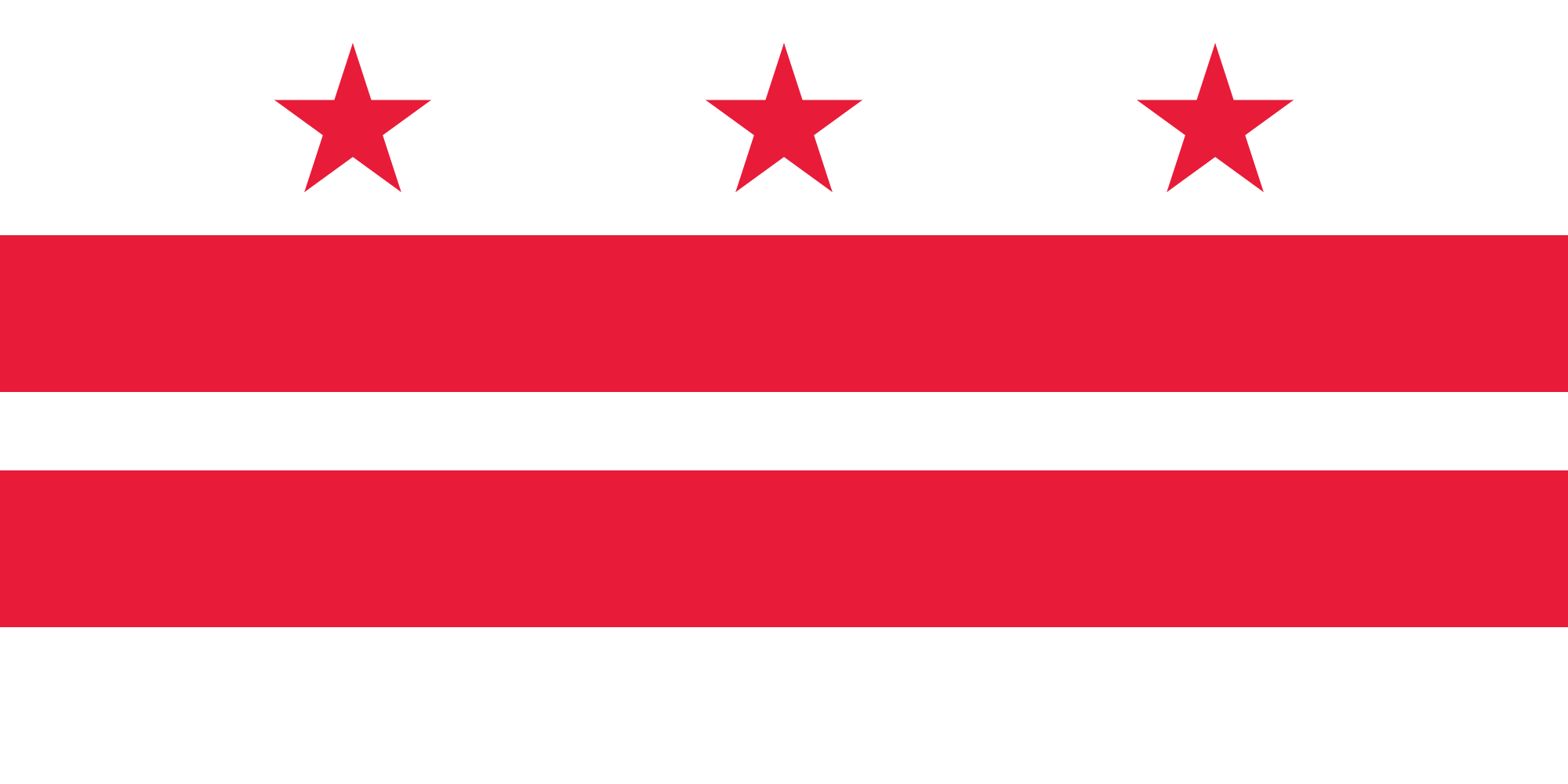
The design of the D.C. flag, two red bars under three red stars on white, comes straight from the coat of arms of George Washington's family, documented in England since the 12th century. That makes its design centuries older than the United States itself. Adopted in 1938 after a public competition, it won NAVA's 2004 survey as the best city flag in America.
It is also a rare case of a flag gaining political meaning over time: since 2017 the city has periodically flown versions referencing D.C. statehood, and the three stars have been reinterpreted by residents in dozens of ways. A flag simple enough to be a canvas is a flag people will argue over, which is a sign of life.
Tokyo and Denver: Modern Minimalism


Tokyo uses a stylized six-rayed sun, a crest derived from the character for "east" in the city's name, on a deep purple field. Purple is so rare in flags (as we saw with Dominica) that Tokyo's banner is instantly identifiable among thousands. Denver's flag was designed in 1926 by high school student Margaret Overbeck: a yellow sun over a white mountain zigzag and a blue sky, compressing Colorado's entire landscape into three shapes. Both designs are around a century old and still look like they were drawn yesterday, which is the definition of timeless design.
Europe's Old Masters: Barcelona and London
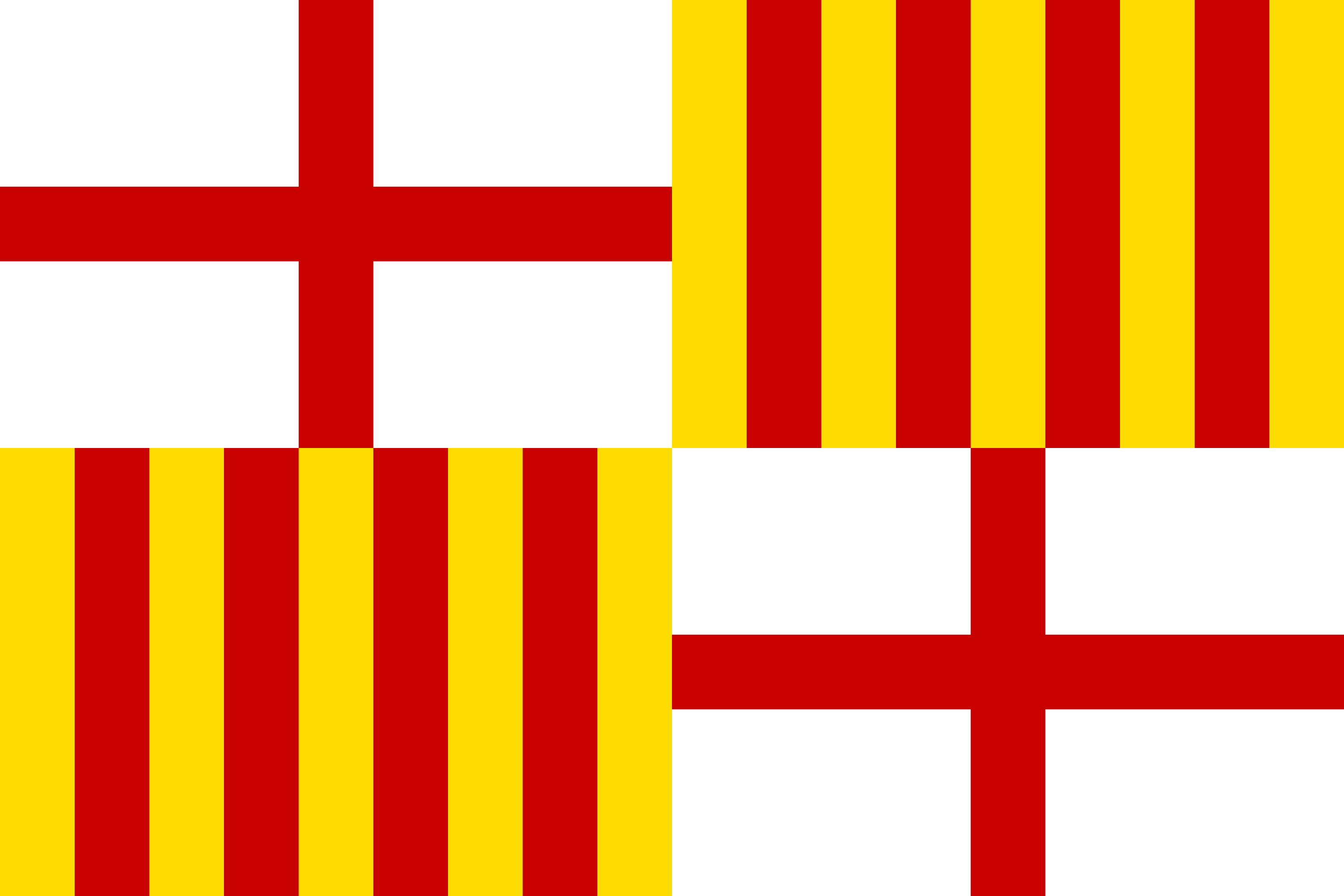
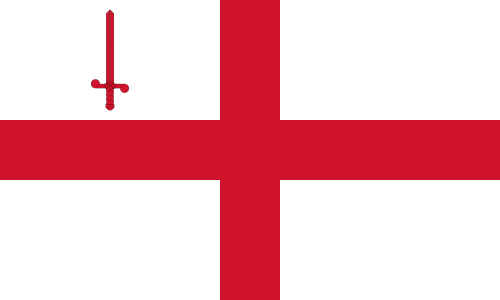
European city flags play a different game: instead of modern symbolism, they carry centuries of heraldry. The Barcelona flag quarters the cross of Saint George, the city's patron, with the four red bars of the Senyera of the old Crown of Aragon, compressing seven hundred years of political history into four rectangles. The City of London flag is a white field with the St George's Cross and one precise detail: a small red sword in the canton, the sword said to have martyred St Paul, the city's patron. Not a dragon-slaying sword, as tour guides sometimes claim, though the city's dragon supporters guard its coat of arms.
Milwaukee: How Not to Do It
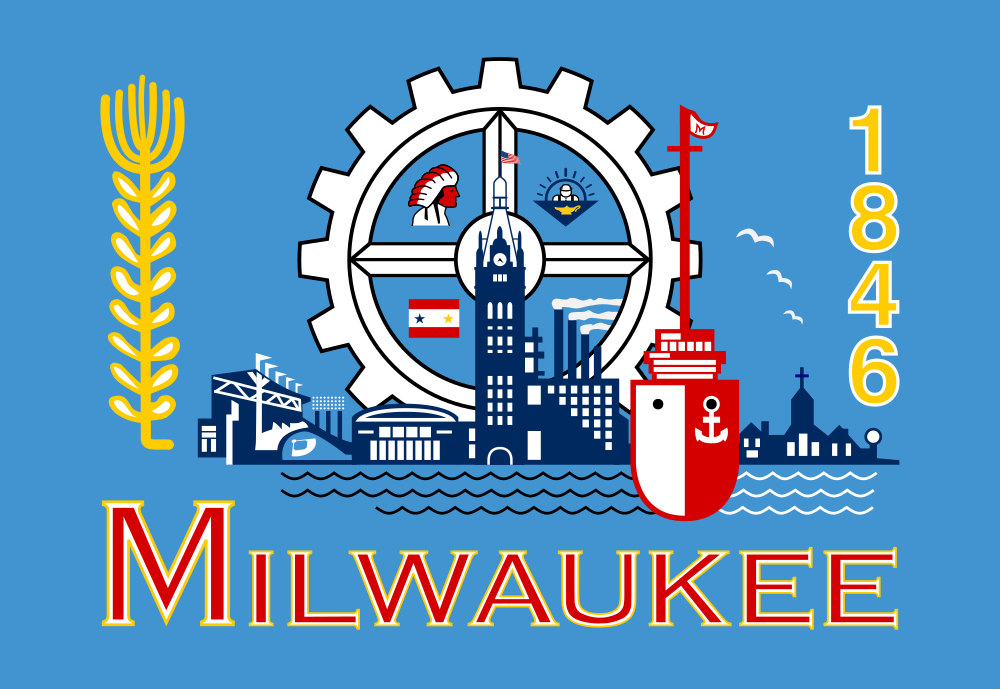
The 1955 Milwaukee flag is the textbook example of design by committee: it crams a gear, a ship, a stalk of barley, City Hall, an indigenous emblem and, famously, a small Civil War battle flag, a flag inside a flag. Vexillologists use it in lectures as the definitive "kitchen sink" flag, and it ranked near the bottom of NAVA's 2004 survey.
The response became a case study in civic design. In 2016, a grassroots competition produced the "People's Flag of Milwaukee": a golden sunrise over Lake Michigan in three colors. It spread across the city on storefronts and merchandise for years before the city government formally embraced it, proving that a better flag can win by adoption rather than decree.
The Seal-on-a-Bedsheet Problem
Milwaukee is not alone. The most common failure mode of city flags, especially in the US, is what flag scholars call SOB: "seal on a bedsheet", a detailed municipal seal, often with text, floated on a plain background. Seals were designed to stamp documents at close range, not to be read on cloth at 100 meters. Pocatello, Idaho, whose flag was essentially a trademarked logo with tiny lettering, finished last of 150 in the NAVA survey and adopted a clean new design in 2017. The lesson generalizes: if you need to write the city's name on the flag, the flag has already failed.
What the Good Ones Have in Common
The pattern across every beloved flag on this page: two or three colors, one strong geometric symbol, no text, and a story a resident can tell in one sentence. Those are essentially the five principles of good flag design that vexillologist Ted Kaye condensed in the pamphlet "Good Flag, Bad Flag", which we covered in our guide to good flag design. City flags face a harder test than national ones: nobody is legally required to fly them, so they live or die purely on affection.
Browse our full city flags collection, 200+ cities and growing, or jump straight to icons like New York, Berlin and Venice to find your own favorites.
Comments
No published comments yet.
Leave a comment
Share a question or something useful about the article. Comments are reviewed before publication. Please leave out personal details and advertising.