
The Rules of Good Flag Design
Vexillology, the study of flags, has developed clear principles about what makes a flag effective. The North American Vexillological Association (NAVA) established five fundamental rules that every good design should follow.
1. Keep It Simple
A flag should be so simple that a child can draw it from memory. The most iconic designs are extremely simple yet immediately recognizable.
Good examples:
 Japan
Japan
 Switzerland
 Bangladesh
Bad examples: Many US state flags that put complex seals on blue backgrounds.
 Montana
 Minnesota
 Kansas
2. Use Meaningful Symbolism
Colors and symbols should relate to what they represent.
 Israel
 Pakistan
 Brazil
3. Use 2 or 3 Basic Colors
Limit the palette to colors that contrast well.
 Germany
 France
 Italy
Italy
Notable exception: South Africa uses six colors but remains distinctive.
 South Africa
4. No Lettering or Seals
Flags should be recognizable from a distance and in motion.
 California
 Saudi Arabia
5. Be Distinctive or Related
A flag should be unique or deliberately related to others.
Distinctive flags:
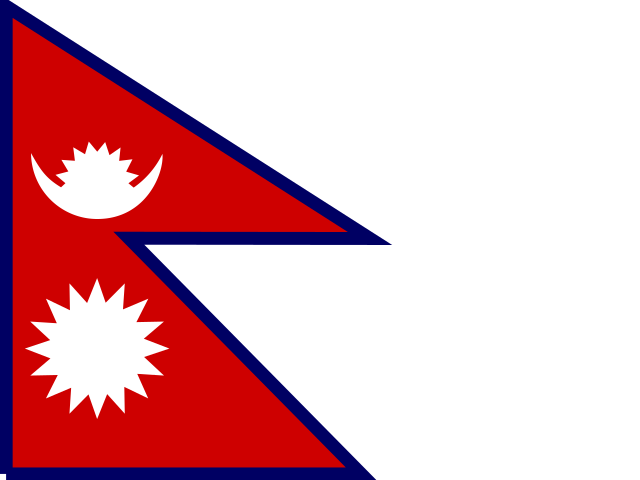 Nepal
Nepal
 Canada
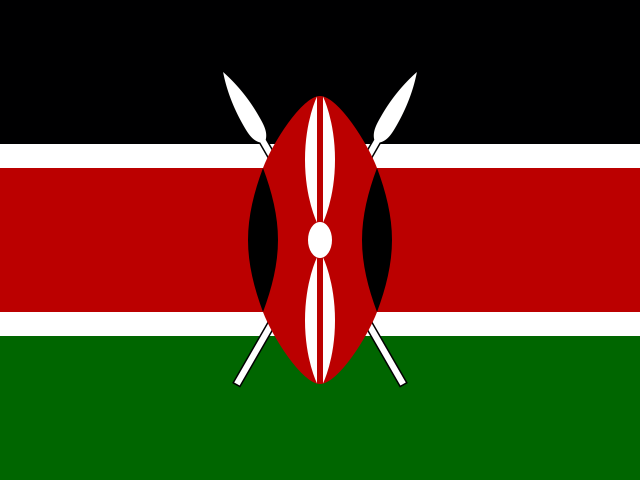 Kenya
Kenya
Nordic Cross family:
 Denmark
 Norway
 Sweden
 Finland
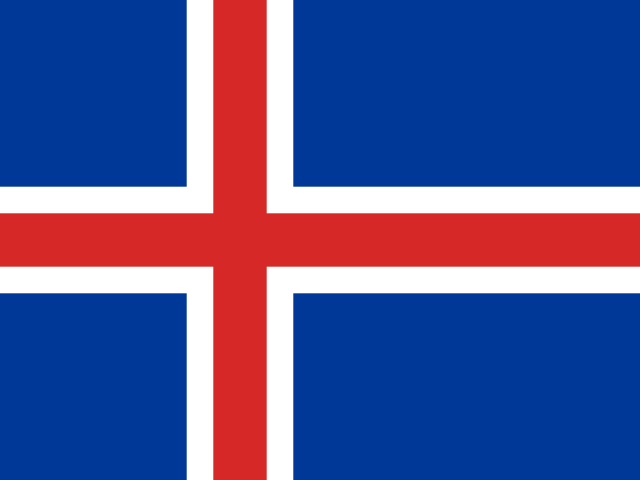 Iceland
Bad example: Chad and Romania are nearly identical.
 Chad
Chad
 Romania
The Redesign Movement
Several states have redesigned their flags following these principles:
 Mississippi (2021)
Comments
No published comments yet.
Leave a comment
Share a question or something useful about the article. Comments are reviewed before publication. Please leave out personal details and advertising.