
Introduction
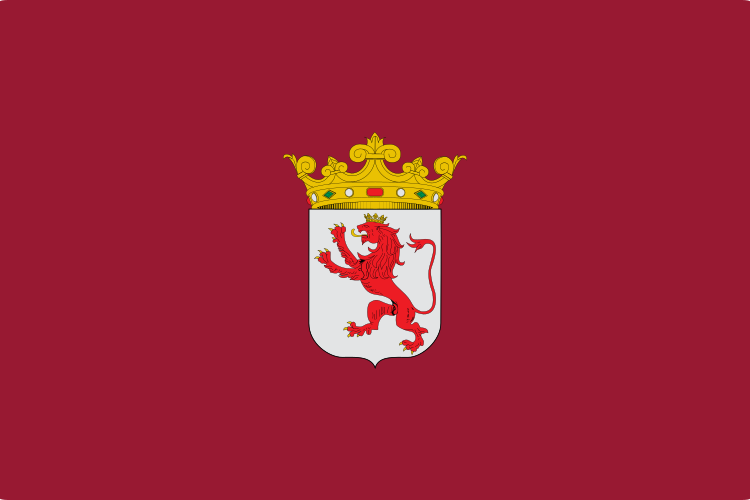
The flag of León, an autonomous community in northwestern Spain, is a simple yet powerful heraldic banner. It features a deep purple (purpure) field with a golden lion rampant positioned at the center, often crowned. This design is a direct representation of the coat of arms of the medieval Kingdom of León, from which the region derives its name and historical identity.
The lion (León in Spanish) is a classic example of canting arms, where the symbol is a visual pun on the name. The specific shade is officially described as purpure in heraldic terms, a rich, reddish-purple distinct from the crimson red used in other Spanish regional flags. The lion is typically depicted in a rampant posture, facing the hoist side, with claws and tongue often shown in red.
As a historic flag, its design precedes modern vexillological conventions, serving primarily as an armorial banner. Its visual strength lies in its high contrast between the purple background and the golden-yellow lion, ensuring recognizability even at a distance. The flag is a cornerstone of Leonese identity and is prominently displayed alongside the national flag of Spain.
Meaning & Symbolism
The flag's symbolism is deeply rooted in heraldry and medieval history. The central purple (purpure) field is a rare and prestigious color in European heraldry, historically associated with royalty, sovereignty, and justice. It signifies the regal status of the ancient Kingdom of León.
The golden lion rampant is the primary symbol, representing strength, courage, and nobility. Its specific depiction—rampant, crowned, and often with red claws and tongue (armed and langued gules)—is a precise heraldic blazon. The crown atop the lion's head directly references the monarchic history of the region. Together, the colors and symbol proclaim the historic sovereignty and enduring identity of the Leonese people.
History of the León Flag
The flag's origin traces directly to the coat of arms of the Kingdom of León, which first appeared in the 12th century. The use of a purple lion on a silver field evolved into the more familiar golden lion on purple by the late 13th century, notably during the reign of Alfonso X the Wise. This armorial design was consistently used to represent the kingdom for centuries.
With the formation of the modern autonomous community of Castile and León in 1983, the flag of León was formally recognized as the official banner of the Province of León and as the historic symbol representing the Leonese region within the larger community. Its adoption in the modern context is based on its continuous historical use rather than a single modern legislative act.
Curiosities
- The purple (purpure) field is one of the rarest background colors on any official European flag, making it highly distinctive.
- The lion is often called the 'Leonese Lion' or 'Purple Lion' and is a prime example of canting arms, where the symbol (lion/León) represents the name.
- This ancient design influenced other coats of arms, including those of the Spanish monarchy, which historically quartered the Leonese lion.
Download Flag
Download the flag of León in high-quality SVG vector format or PNG raster images. SVG files can be scaled to any size without losing quality.
Construction Sheet
The flag follows a standard 2:3 proportion. The purple field occupies the entire flag. The golden lion is centered, with its height typically spanning approximately two-thirds of the flag's hoist. The lion's design should follow the traditional heraldic blazon: rampant, crowned, facing the hoist, with details (claws, tongue) in red. Official color specifications may define the purple using Pantone or RGB codes for consistent reproduction.
Flags Similar to León Flag
Common Misidentifications
Rarely misidentified due to its unique purple and gold heraldic design, though those unfamiliar with heraldry may not recognize its specific regional significance.