
Introduction
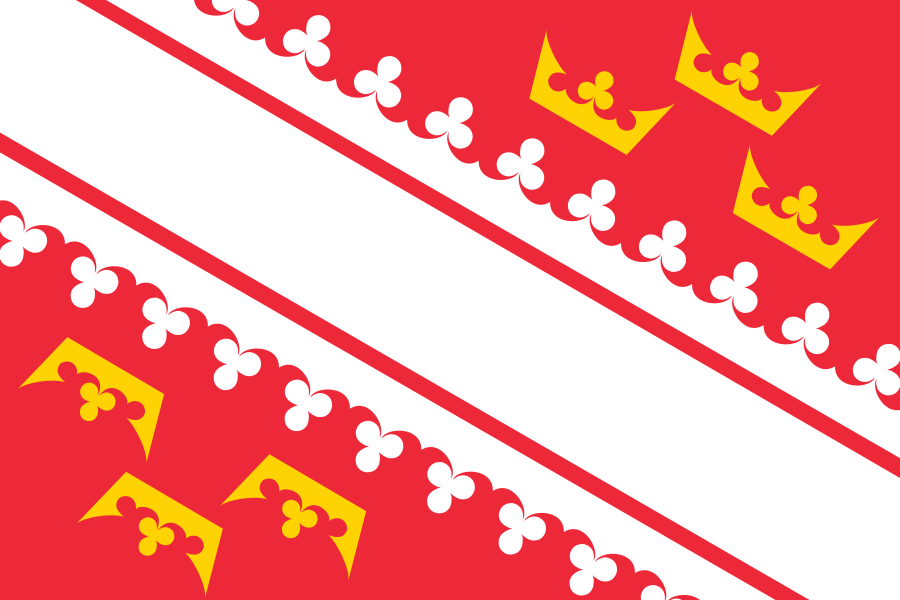
The flag of Grand Est is the official banner of the administrative region in northeastern France, created by the territorial reform of 2016. It is a distinctive white field featuring a complex, stylized logo in the center, which combines several symbolic elements representing the region's heritage. The design is a modern graphic emblem rather than a traditional heraldic banner, reflecting its recent adoption as a regional identifier.
The central motif is composed of two main parts: a sweeping yellow curve on the left and a set of four interlaced crosses on the right, all rendered in a single shade of blue. This monochromatic blue emblem is placed prominently against the plain white background, creating a clean and contemporary visual identity. The flag's design prioritizes symbolic representation of the region's composite territories over conventional vexillological patterns.
Unlike many French regional flags that draw directly from historic coats of arms, the Grand Est flag uses a modern logo designed for versatile use across digital and physical media. Its simplified color palette of white and blue with yellow accents ensures high visibility and easy reproduction. The flag is commonly seen flying at regional government buildings and used in official communications throughout the territory.
Meaning & Symbolism
The flag's central logo is rich with symbolism intended to unite the region's diverse historical components. The large yellow curve on the left represents the River Rhine, a major natural and economic border, symbolizing openness and connection to Europe. The four interlaced crosses on the right are directly inspired by the Cross of Lorraine, a potent historical symbol associated with the region, particularly former duchies and the Resistance during World War II.
The blue color of the emblem symbolizes the European vocation and the waterways of the region, while the yellow of the curve adds a note of warmth and prosperity. The intertwining of the curve and crosses is meant to visually represent the union of the former regions of Alsace, Champagne-Ardenne, and Lorraine into a single cohesive entity. The clean white background provides contrast and symbolizes peace and the blank page of a new common future.
History of the Grand Est Flag
The flag was officially adopted in 2016 following the creation of the Grand Est region by the French territorial reform law of 2015. It was introduced alongside the region's new name and visual identity, which were selected to foster a new common identity for the merged territories. The design process involved a regional council decision to adopt a modern graphic logo suitable for the 21st century, rather than combining the historic banners of the predecessor regions.
The emblem was designed by the Regional Council in consultation with design agencies, aiming for a symbol that was both forward-looking and respectful of historical roots. Its adoption marked a deliberate break from traditional heraldry to establish a brand for the new administrative entity, intended for use on flags, official documents, and signage. The flag has been in use since the region's operational inception in 2016.
Curiosities
- The flag is one of the few French regional banners that is primarily a corporate-style logo on a field, rather than a heraldic banner or shield.
- The four interlaced crosses are a stylized, modern interpretation of the traditional Cross of Lorraine, which features two horizontal bars.
- The specific shade of blue used in the logo is defined in the region's official graphic charter for consistent reproduction across all media.
Download Flag
Download the flag of Grand Est in high-quality SVG vector format or PNG raster images. SVG files can be scaled to any size without losing quality.
Construction Sheet
The flag follows standard French regional proportions of 2:3. The central logo is positioned at the exact center of the white field. Official graphic guidelines specify the logo's dimensions relative to the flag's height, but precise public construction details are part of the region's proprietary visual identity system. The design relies on the accurate reproduction of the complex, curved logo, which requires a digital master file for proper scaling.
Flags Similar to Grand Est Flag
Common Misidentifications
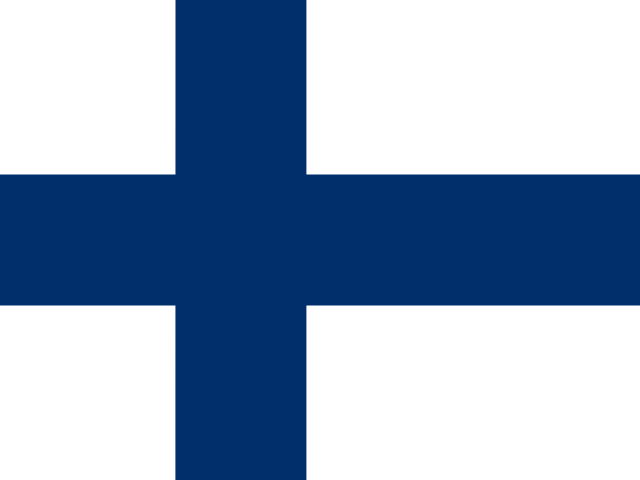
Rarely misidentified due to its unique, modern logo, but the blue-on-white scheme is common globally.