
The Oldest Flags in the World
The history of national flags is fascinating and connects us with centuries of tradition, battles, and legends. Some of the flags flying on flagpoles around the world today have origins dating back to the Middle Ages.
Denmark - 1219: The Flag That Fell From the Sky
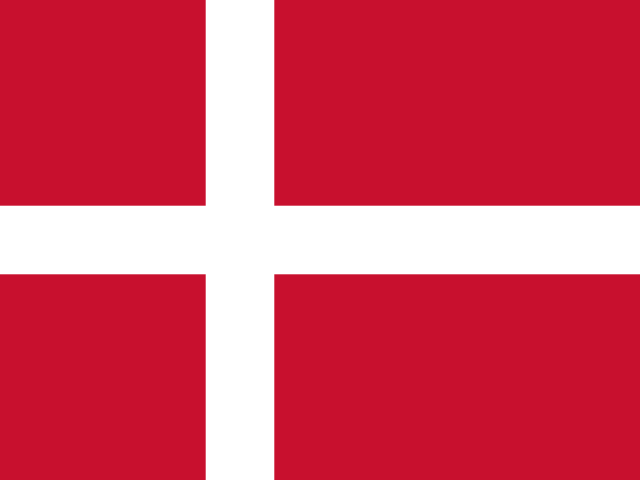
The Danish flag, known as the Dannebrog ("the cloth of the Danes"), holds the Guinness record as the oldest national flag in continuous use. Its origin is shrouded in legend.
According to tradition, during the Battle of Lyndanisse (present-day Tallinn, Estonia) on June 15, 1219, the Danes were losing to the pagan Estonians. At the most critical moment, a red flag with a white cross fell from the sky. The Danes interpreted this as a divine sign, regrouped, and won the battle.
Although historians debate the veracity of this legend, the fact remains that the Dannebrog has been Denmark's symbol for over 800 years. The Scandinavian cross design it introduced has influenced the flags of all Nordic countries.
Austria - 1230: Born in Blood
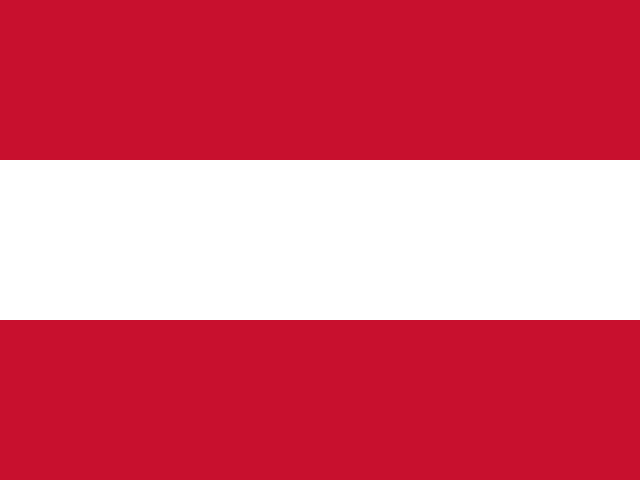
Austria's flag, with its red-white-red stripes, has one of the most dramatic legends. It is said that Duke Leopold V of Austria fought so fiercely at the Siege of Acre (1191) during the Crusades that his white tunic became completely soaked in blood, except where he wore his belt.
When he removed his belt, the red-white-red pattern we know today remained. Although probably apocryphal, this story has been told for centuries and the design appears in records from 1230.
Scotland - 1542: The Cross of St. Andrew
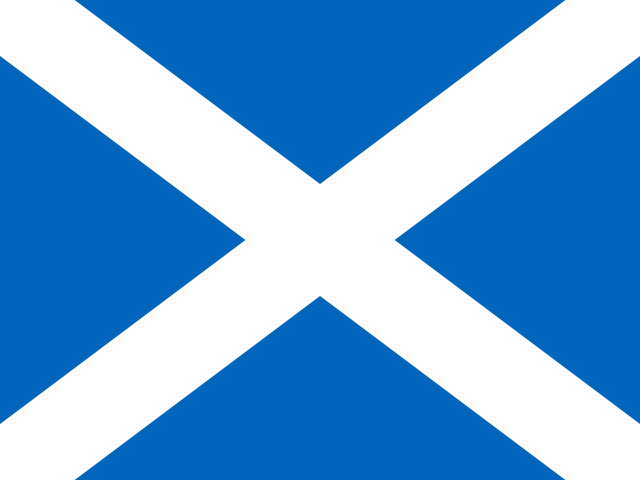
The Scottish flag, known as the Saltire or St. Andrew's Cross, features a white diagonal cross on a blue background. St. Andrew, Scotland's patron saint, was crucified on an X-shaped cross because he considered himself unworthy to die the same way as Jesus.
Although the cross had been used since the 12th century, it was officially adopted in 1542. It is one of the oldest flags still representing a nation and forms part of the British Union Jack.
Netherlands - 1572: The Father of Tricolors
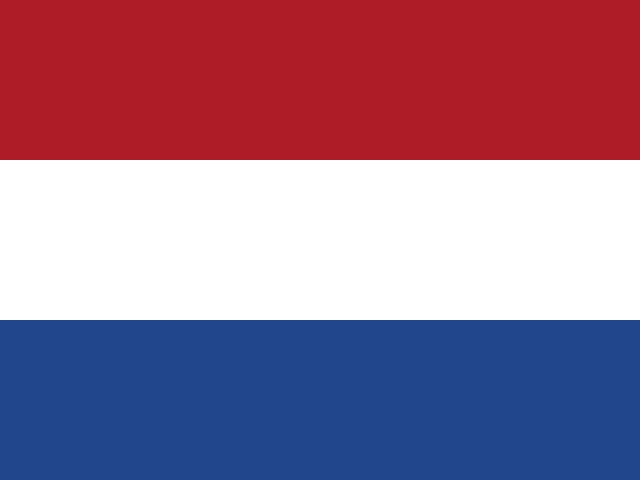
The original Dutch tricolor was orange-white-blue, the colors of William of Orange, leader of the revolt against Spain. Over time, the orange changed to red because the orange dye faded at sea and was difficult to produce.
This three horizontal stripe design was revolutionary and became the model for dozens of subsequent flags, including those of France, Russia, and many more countries.
Switzerland - 1339: The Oldest Cross

The white cross on a red background first appeared at the Battle of Laupen in 1339, when soldiers of the Swiss Confederation used it to identify themselves. However, the current square flag was not officially adopted until 1889.
Switzerland and the Vatican are the only countries in the world with square flags.
The Nordic Flags: A Family
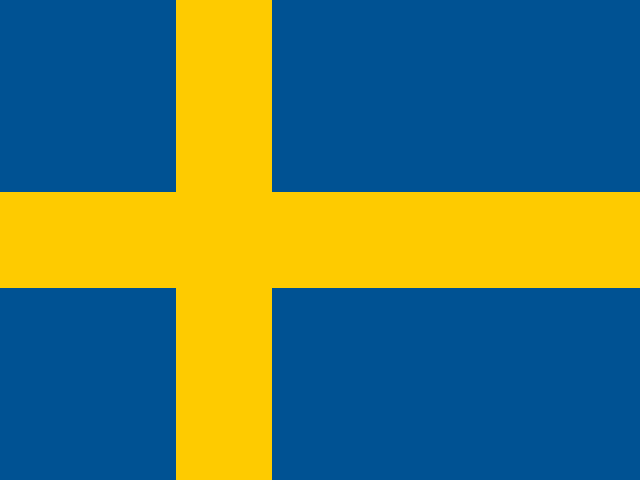
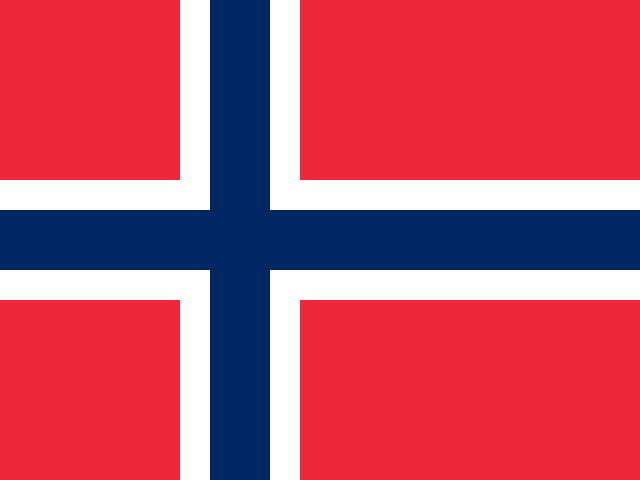

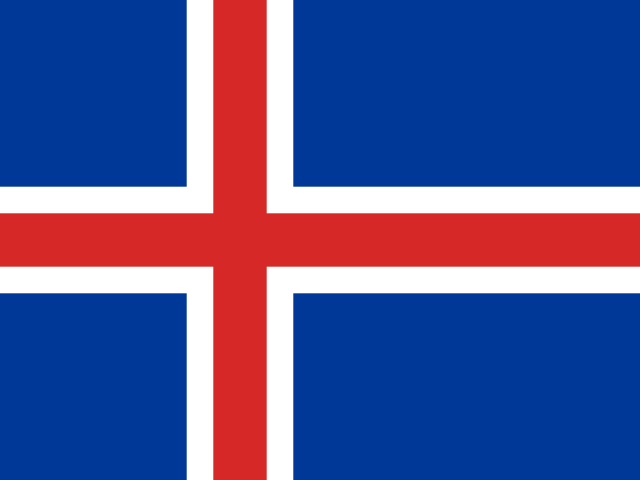
All Nordic flags share the Scandinavian cross design, inherited from the Danish Dannebrog. The cross is offset toward the hoist side, a unique feature of this family of flags.
Why Did They Survive?
The oldest flags tend to have simple designs: crosses, stripes, basic colors. This simplicity made them easy to reproduce and recognize, which contributed to their survival through the centuries.
Additionally, many are tied to religious or patriotic legends that turned them into sacred symbols for their peoples, protecting them from changes through revolutions and wars.
Comments
No published comments yet.
Leave a comment
Share a question or something useful about the article. Comments are reviewed before publication. Please leave out personal details and advertising.