
Flags of the Caribbean: A Complete Guide
The Caribbean is a small region with an outsized flag heritage. Between 1962 and 1985, more than a dozen island nations gained independence from Britain, and each one faced the same question: how do you design a flag from scratch? The answers broke with European tradition. Instead of crosses, lions and stripes borrowed from a mother country, the new Caribbean flags used bright colors, bold geometry and hyper-local symbols: a parrot, a spice, two volcanoes. This guide covers the whole family, from the revolutionary flags of the 19th century to the newest designs of the 1980s.
The Old Guard: Haiti, the Dominican Republic and Cuba
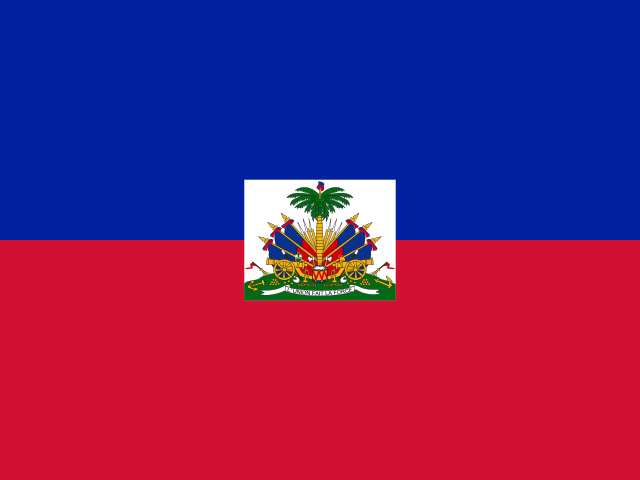
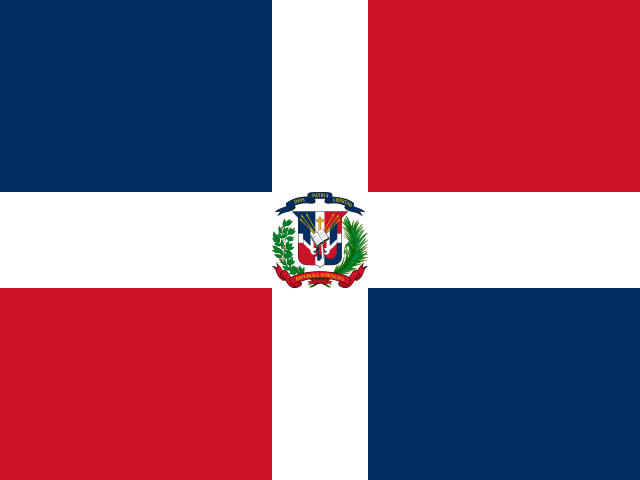
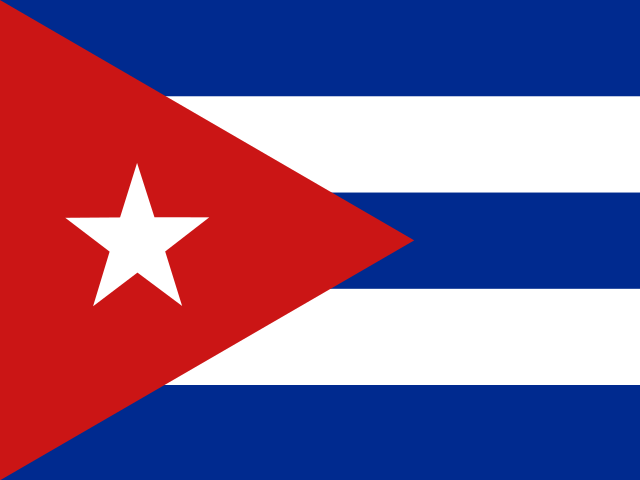
Long before the independence wave of the 1960s, three Caribbean nations had already written flag history. Haiti, the world's first Black republic, created its flag in 1803 during the revolution: according to tradition, Jean-Jacques Dessalines ripped the white band out of the French tricolor and had Catherine Flon sew the blue and red back together, a founding act commemorated every May 18 as Flag Day.
The Dominican Republic, independent from Haiti in 1844, holds one of the most unusual records in vexillology: it is the only national flag in the world that features an open Bible, displayed in the coat of arms at its center. Cuba's flag is older than its independence: the design was created in 1849 by Venezuelan-born general Narciso López for an uprising against Spain, and it only became official in 1902. Its lone star later inspired the Puerto Rican flag, which deliberately mirrors Cuba's design with the colors swapped.
Dominica: The Purple Parrot
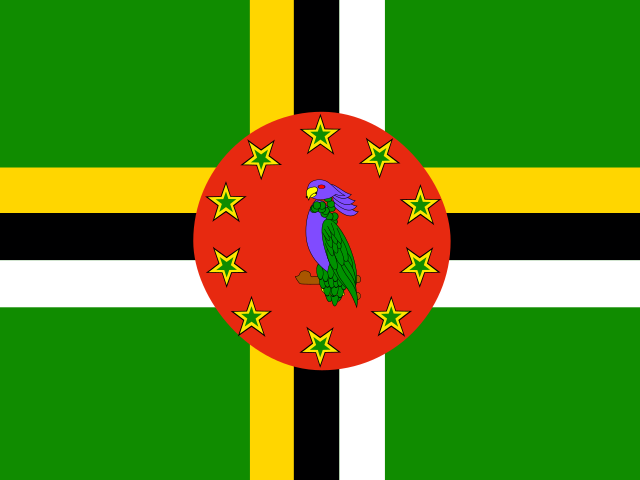
The flag of Dominica is one of only two national flags in the world that contain the color purple (the other is Nicaragua's, hidden in a tiny rainbow). The purple belongs to the Sisserou parrot at its center, a bird that lives only in Dominica's mountain forests and is estimated to number just a few hundred individuals in the wild. Few countries have bet their national symbol on something so fragile.
The rest of the design is just as deliberate. The ten lime-green stars around the parrot represent the country's ten parishes. The cross of yellow, black and white stands for the Trinity and for the island's people: yellow for sunshine and the original Carib (Kalinago) inhabitants, black for the rich volcanic soil and African heritage, white for rivers and purity. The flag was adopted at independence in 1978 and the parrot's orientation was corrected in a 1988 revision, one of several small tweaks that make old Dominica flags collector's items.
Grenada: Nutmeg on a Flag
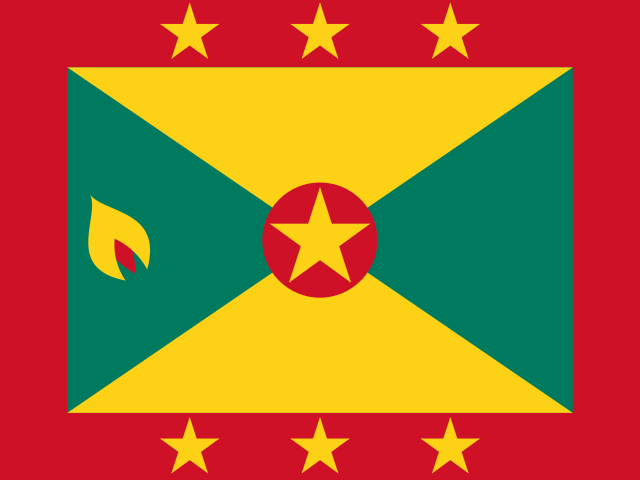
Grenada is known as the Island of Spice, and its flag proves it: the small oval symbol inside the hoist triangle is a nutmeg pod, split open to show the seed. When the flag was adopted at independence in 1974, Grenada supplied roughly a third of the world's nutmeg, and the spice remains a pillar of its economy today. No other country has put a crop so literally at the heart of its flag.
The seven stars stand for the country's seven parishes, and the red border symbolizes courage and unity wrapping the whole nation. Red, gold and green are the classic Pan-African colors, a nod to the ancestry of most Grenadians. Trivia for quiz lovers: the flag's designer, Anthony C. George, packed all of this into one of the busiest yet most recognizable designs in the region.
Saint Lucia: The Twin Pitons
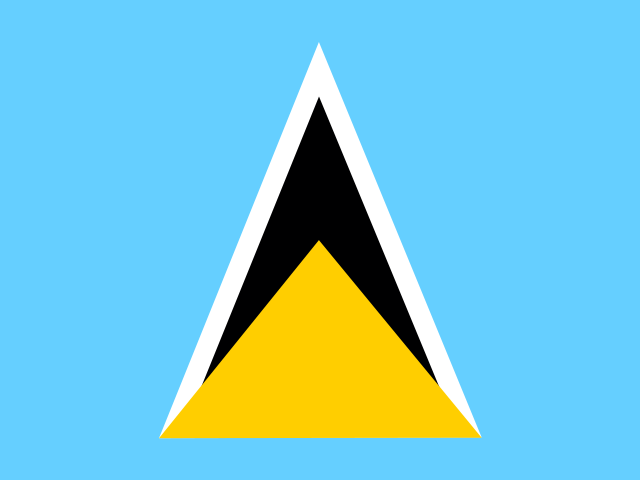
The cerulean blue field of the Saint Lucia flag represents the sky and the Caribbean Sea. The black and yellow triangles are the Pitons, the two volcanic spires that rise dramatically from the sea near Soufrière and are now a UNESCO World Heritage Site. It is one of the few flags in the world that portray a specific, recognizable landscape rather than an abstract idea.
The flag was designed by local artist Dunstan St. Omer, arguably the island's most famous painter, and adopted in 1967 when Saint Lucia became a self-governing associated state. The black and white together carry a second meaning: two cultures, African and European, living in harmony, with the black triangle standing taller. The design was subtly refined in 2002, when the blue was standardized to today's cerulean tone.
Saint Kitts and Nevis: Stars of Hope
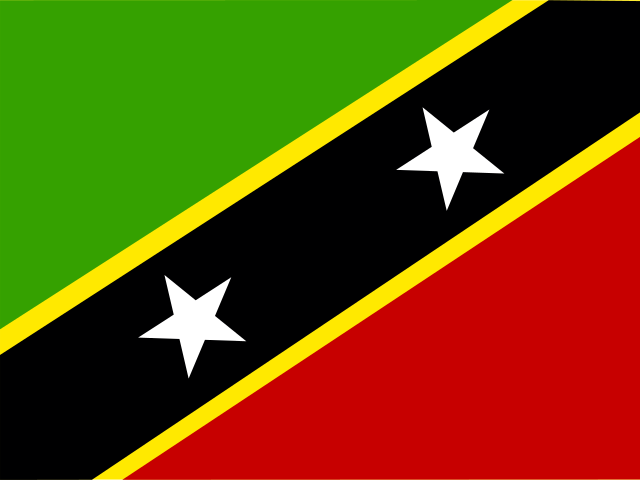
The flag of Saint Kitts and Nevis was designed by Edrice Lewis, a student who won the national competition held before independence in 1983. Her design sweeps a black diagonal band, edged in yellow, across a field of green and red: green for the islands' fertility, red for the struggle against slavery and colonialism, yellow for year-round sunshine and black for African heritage.
The two white stars on the band are the detail everyone gets wrong. They do not represent the two islands, as most people assume: Lewis herself explained they stand for hope and liberty. The federation is the smallest sovereign state in the Americas by both area and population, which makes its flag one of the least seen and most misidentified in the world, often confused with distant relatives like the flags of other small island states.
Antigua and Barbuda: A Rising Sun
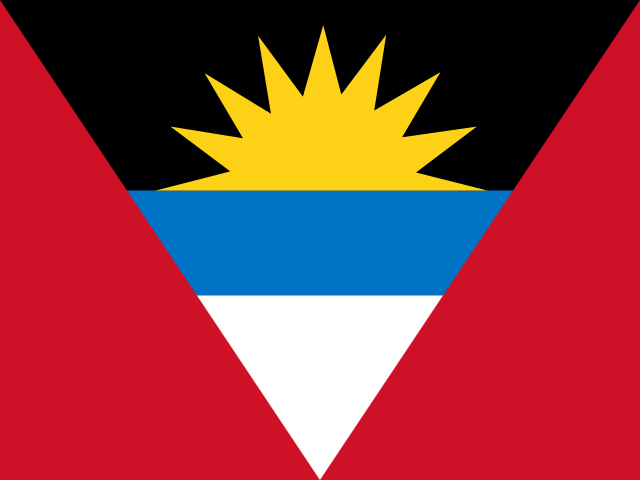
The golden sun on the flag of Antigua and Barbuda symbolizes the dawn of a new era. It was designed in 1967 by Reginald Samuel, a local art teacher and sculptor, who won a national competition against more than 600 entries, reportedly sketching his design in about half an hour before the deadline. The V shape formed by the red triangles stands for victory, and the white and blue bands evoke the beaches and the sea: the country markets itself as having 365 beaches, one for every day of the year.
Saint Vincent: The Gems of the Antilles
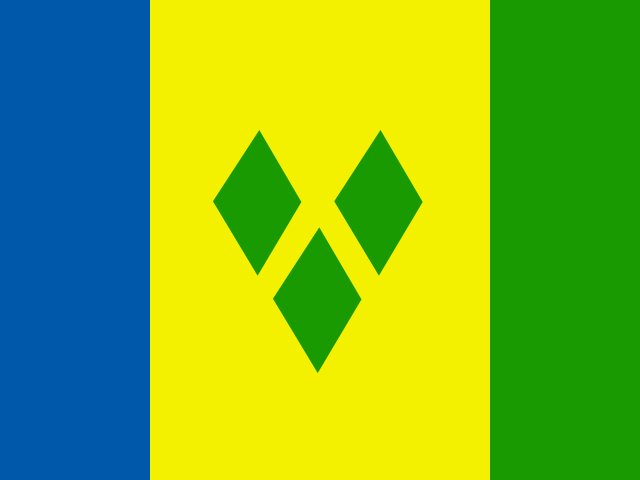
The three green diamonds on the flag of Saint Vincent and the Grenadines form a V for Vincent. The islands are nicknamed the Gems of the Antilles, and the diamonds honor that. The current flag dates from 1985 and replaced a short-lived independence design that showed a breadfruit leaf behind the diamonds; the leaf was dropped precisely because it cluttered the design, an unusually honest act of flag self-criticism.
The result is one of the cleanest flags in the Americas: three vertical bands of blue, gold and green for sky, sunshine and vegetation, plus the three gems. Nothing else. Swiss graphic designer Julien van der Wal, who also worked on Geneva's visual identity, is credited with the simplification.
Trinidad and Tobago: Speed in Diagonal
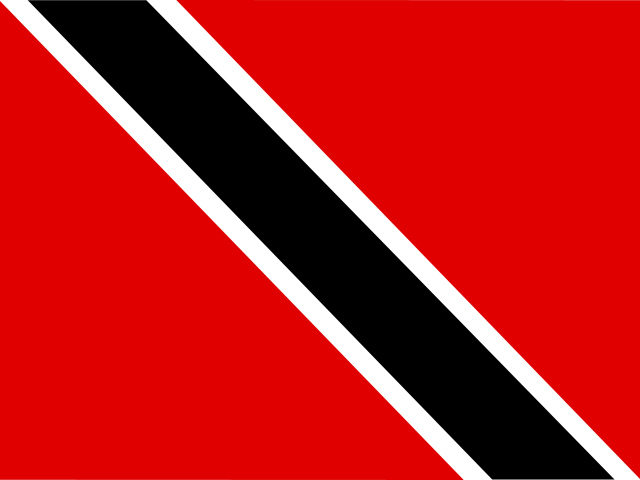
The flag of Trinidad and Tobago shows how much a single diagonal can do. The black band running from the upper hoist represents the strength and identity of the people, the white fringes stand for the sea and equality, and the red field for the sun and the vitality of the nation. Designed by a committee that included artist Carlisle Chang, it was adopted on independence day in August 1962 and has never changed, becoming one of the most stable and most imitated designs of the region.
The Classics: Jamaica, Barbados and the Bahamas
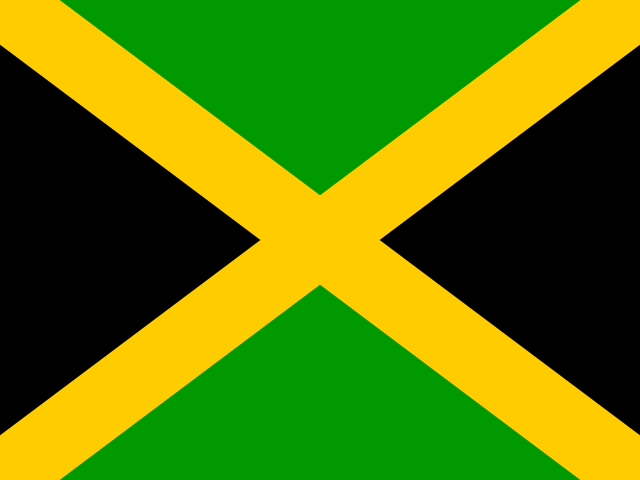
Jamaica flies the only national flag in the world with no red, white or blue, a distinction it has held alone since Mauritania added red to its flag in 2017. The design was chosen in 1962 from over 300 competition entries, and its original horizontal stripes were rearranged into the famous gold saltire at the last minute because they looked too similar to Tanganyika's flag.
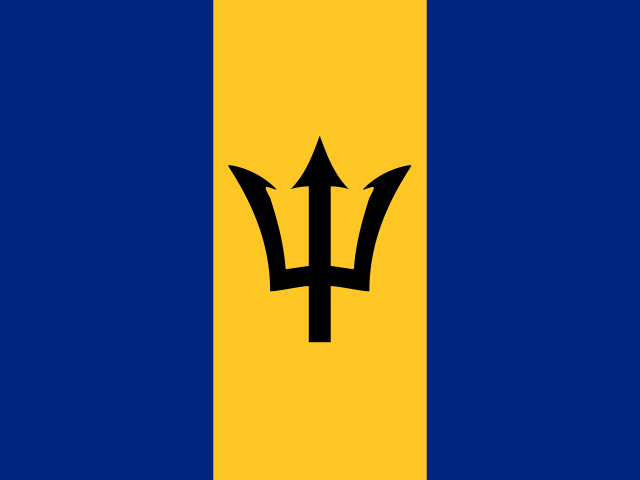
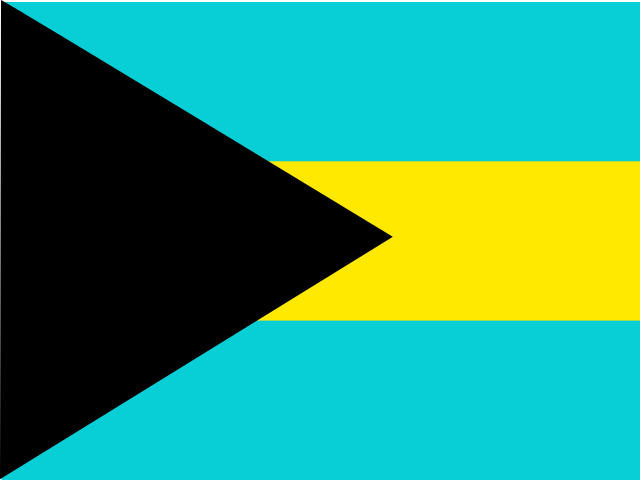
Barbados adopted its flag in 1966, and its broken trident is one of the sharpest pieces of symbolism in the region: the colonial badge of Barbados showed Britannia holding a complete trident, so the new nation snapped the shaft, keeping the head as a symbol of independence. The three points stand for government of, for and by the people. The Bahamas (1973) closes the trio with aquamarine for the sea, gold for the sun and sand, and a black triangle for the unity and strength of its people.
What Caribbean Flags Have in Common
Put them side by side and patterns emerge. Almost all of them date from a 23-year window (1962-1985), which makes the Caribbean the world's densest cluster of modern, purpose-designed flags. Triangles and diagonals dominate, a deliberate break from the horizontal tricolors of Europe. Black appears constantly, almost always standing for African heritage, something no European flag does. And several were designed by ordinary citizens through open competitions: a student in Saint Kitts, an art teacher in Antigua, a painter in Saint Lucia.
Want to test yourself? Try our Americas flag quiz and see how many Caribbean flags you can recognize, or compare any two flags side by side with our comparison tool.
Comments
No published comments yet.
Leave a comment
Share a question or something useful about the article. Comments are reviewed before publication. Please leave out personal details and advertising.