
Introduction
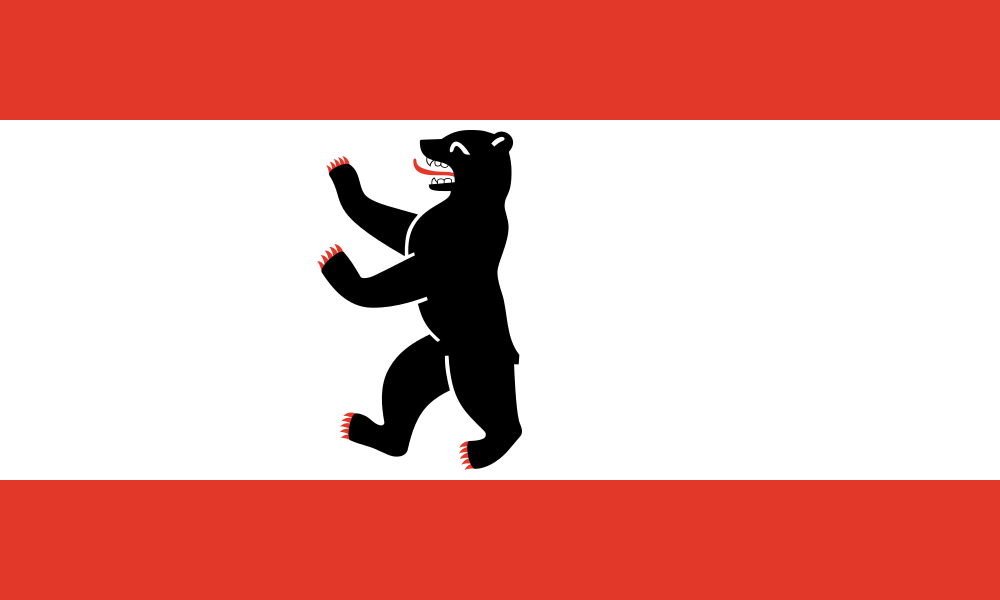
The flag of Berlin, the capital city of Germany, is a distinctive tricolor banner featuring three horizontal stripes of red-white-red. The central white stripe is twice the height of each red stripe, creating a bold visual contrast. The flag's most prominent feature is the Berlin Bear, a heraldic symbol known as the 'Berliner Bär', which is centered on the white field.
This bear is depicted rampant (standing on its hind legs) and tongued and clawed in red, set against a white escutcheon (shield). The design is a direct representation of the city's coat of arms, making it a classic example of an armorial banner. The flag's simple yet powerful composition ensures high visibility and instant recognition.
Officially adopted in its modern form in the 20th century, the flag serves as the civil flag for the state and city of Berlin. Its colors and central emblem are deeply rooted in the city's long history, symbolizing strength, sovereignty, and civic pride for its residents.
Meaning & Symbolism
The primary symbol of the flag is the Berlin Bear, which has been associated with the Margraviate of Brandenburg and later Berlin since at least the 13th century. The bear represents strength, resilience, and sovereignty, qualities historically attributed to the city and its rulers. Its red tongue and claws symbolize readiness and vitality.
The red-white-red color scheme is also significant. While the specific meaning of the colors is not officially defined, they are traditionally linked to the Hanseatic League, of which Berlin was a member. More broadly, the colors are understood to represent courage and strength (red) and peace and honesty (white). The bear placed upon the shield signifies the city's authority and its status as a state within the Federal Republic of Germany.
History of the Berlin Flag
The bear first appeared on Berlin's seals in the 13th century, though its exact origin is debated. The modern tricolor design with the bear was officially established as the state flag with the Greater Berlin Act of 1920, which created the unified city. This design was confirmed in the 1954 state constitution of West Berlin, following the city's division after World War II.
During the Cold War, both East and West Berlin used variants of the bear flag, with East Berlin adding socialist symbols to its coat of arms. Upon German reunification in 1990, the traditional red-white-red flag with the simple bear shield was reinstated as the official flag for the entire reunified state of Berlin, symbolizing the city's restored unity.
Curiosities
- The Berlin Bear is so iconic it has a dedicated statue, the 'Buddy Bear', and is the namesake for the city's international film festival, the Berlinale, whose trophy is a golden bear.
- Unlike many German state flags, Berlin's flag is almost always used in its full armorial version with the bear; a plain tricolor without the emblem is rarely seen.
- The specific shade of red used in the flag is officially defined in the state's constitution and corresponds to the HKS color code 14.
Download Flag
Download the flag of Berlin in high-quality SVG vector format or PNG raster images. SVG files can be scaled to any size without losing quality.
Construction Sheet
The flag's proportions are 3:5 (width to height). The three horizontal stripes are arranged in the order red-white-red. The height of the central white stripe is exactly half (5/10) of the total flag height. Each of the two red stripes is one-quarter (2.5/10) of the total height. The bear shield is centered on the white field, with its height equal to 5/9 of the white stripe's height.
Flags Similar to Berlin Flag
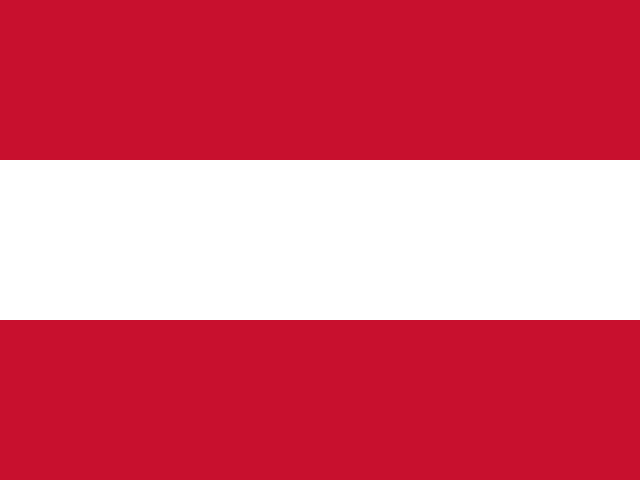 Austria
red-white-red tricolor · identical red-white-red pattern
Austria
red-white-red tricolor · identical red-white-red pattern
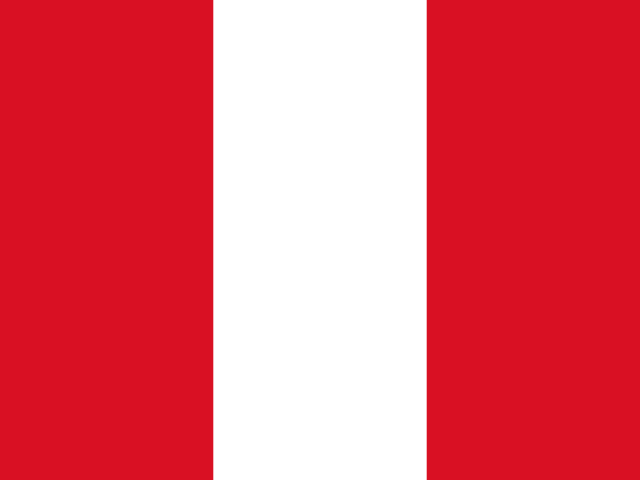 Peru
red-white-red vertical tricolor
Peru
red-white-red vertical tricolor
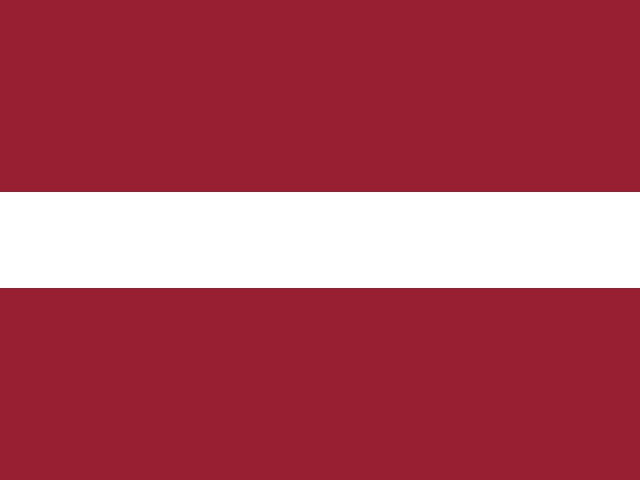 Latvia
carmine-white-carmine, but with different proportions
Latvia
carmine-white-carmine, but with different proportions
 Poland
white-red, inverted order
Poland
white-red, inverted order
 Monaco
red-white, but only two stripes
Monaco
red-white, but only two stripes
Common Misidentifications
Often confused with the flag of Austria at a distance or when the central bear emblem is not visible, due to the identical red-white-red horizontal tricolor pattern.